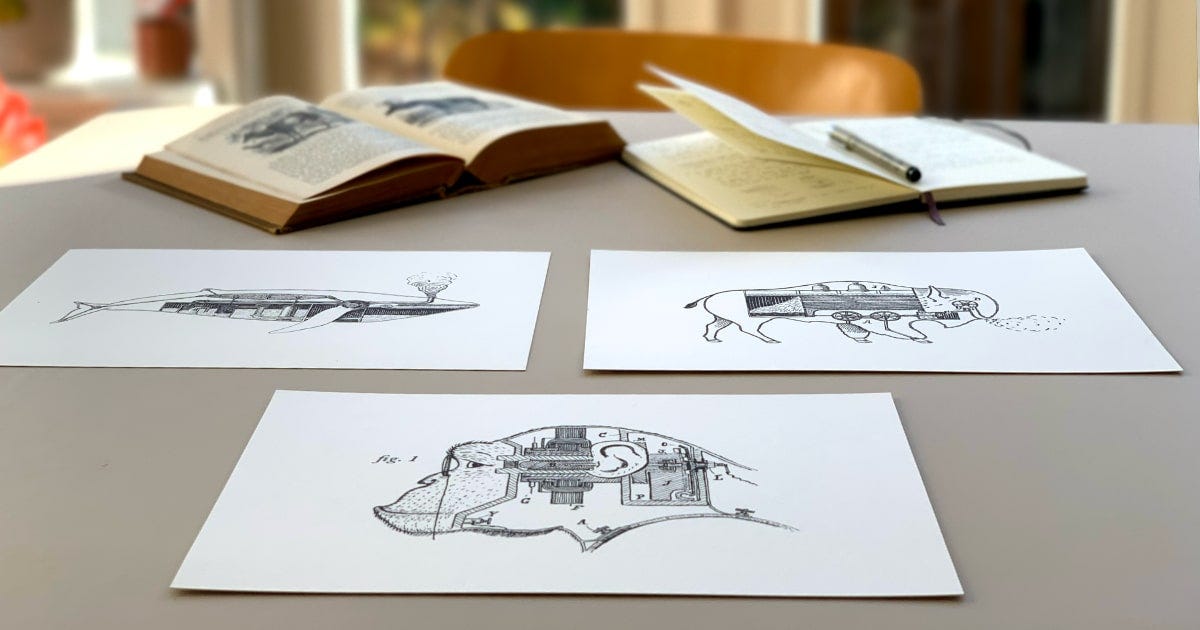
This week I share the fourth work in my series on mechanical animals. In these works, my fascination with 19th-century technology merges with my love of natural history. Every mechanical animal has a story. Previously, I shared The Mechanical Whale, Roosevelt’s Steam Bison, and Babbage’s Mathematical Mammoth.
Illustration
In 2019, Reinier Ladan asked me to create the artwork for Snuggere Zaken, a podcast he was starting with Rick Pastoor, author of GRIP. The podcast was about working smarter, such as managing energy, time, and procrastination.
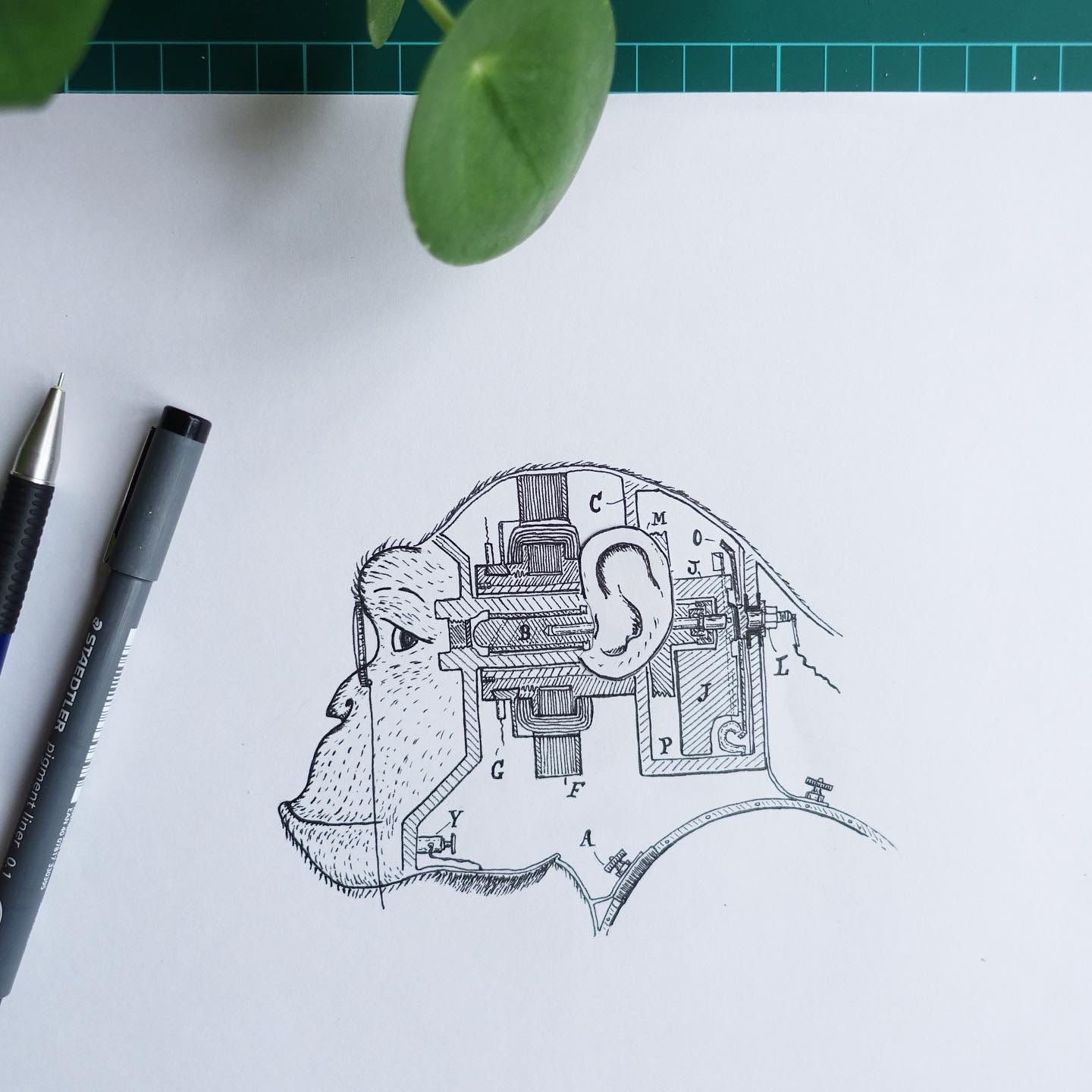
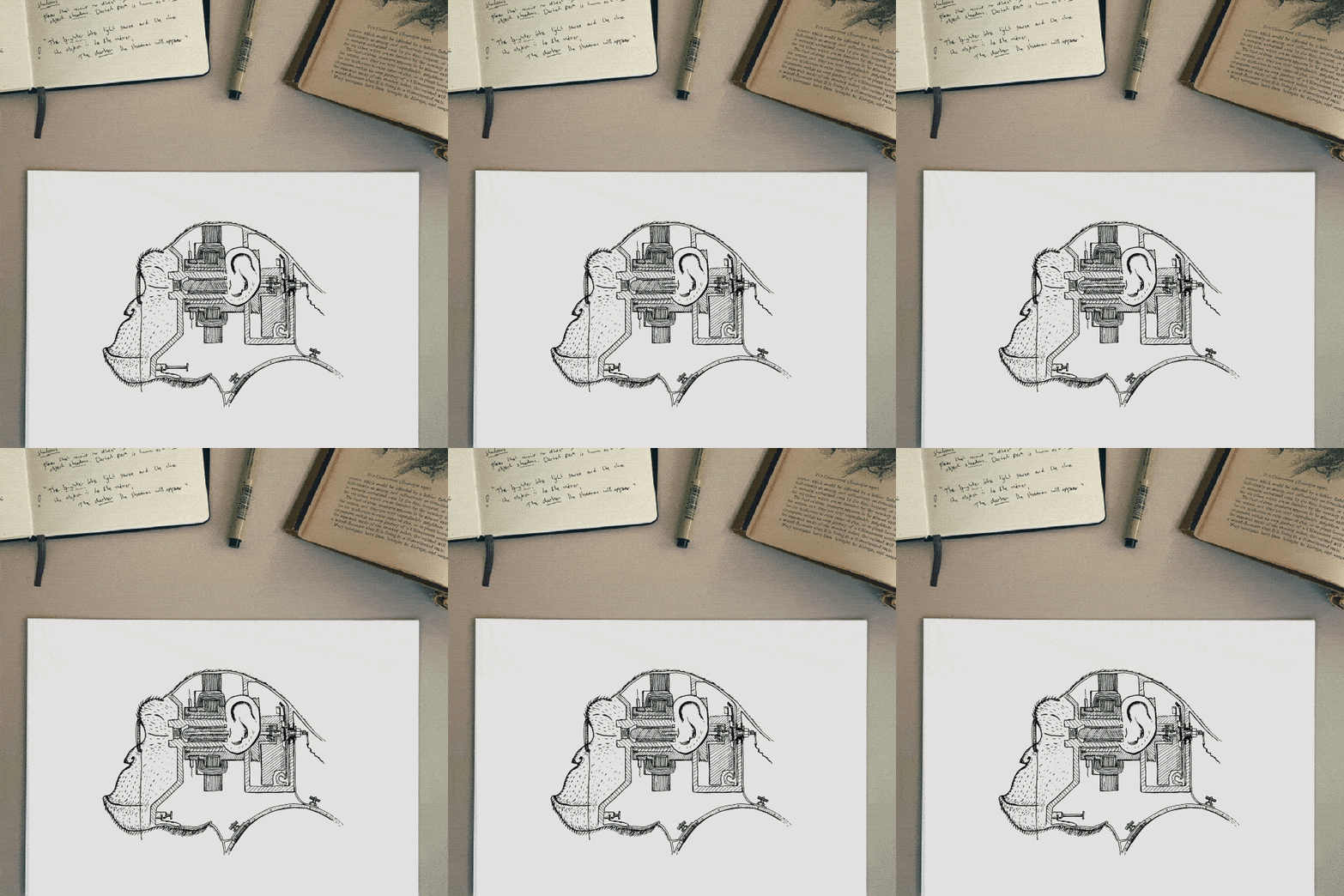
I came up with the Electrical Chimp. After all, we’re just a bunch of monkeys in suits, living in a world that moves faster than our brains can handle. In the chimpanzee’s head, I incorporated Nikola Tesla’s patents, which were designed to prevent energy loss. I gave him a monocle on his nose—the ultimate symbol of a true intellectual, in my opinion.
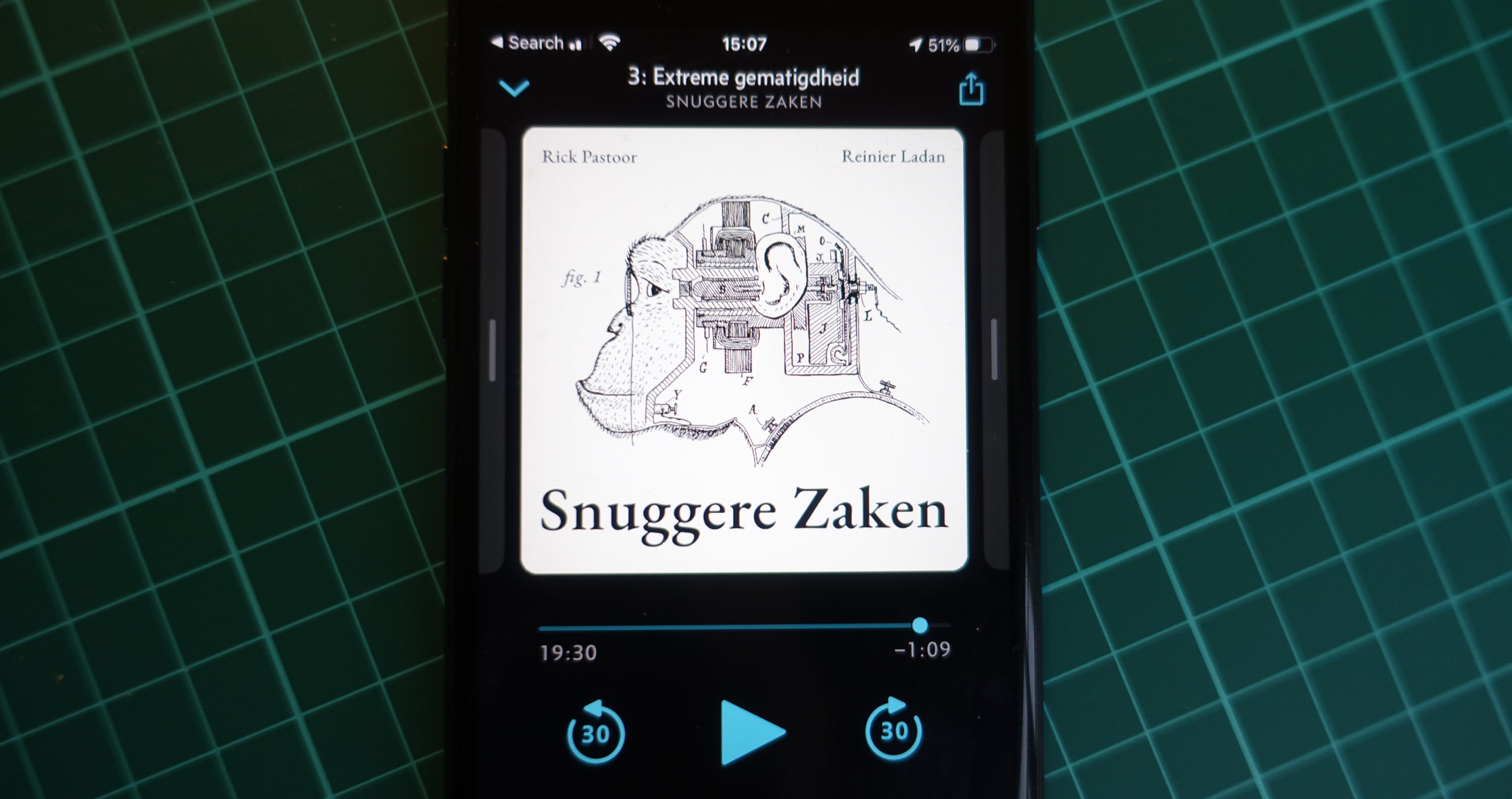
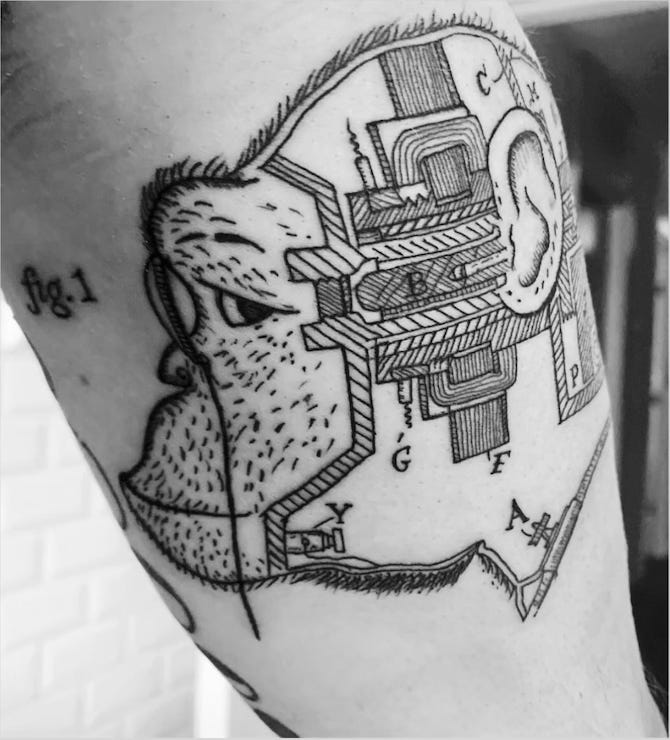
The clever monkey took on a life of his own. I like to use him as my avatar, but there’s also someone (who I don’t know!) walking around with a tattoo of the chimp on his arm1. A few years ago, I brought the chimpanzee to life by animating him.
Reading
I got to know Nikola Tesla better by reading *Wizard* by Marc Seifer. Tesla’s greatest invention is alternating current, but his contributions to science range from radio, wireless telegraphy, turbines, and solar energy to all kinds of measuring equipment.
In a sense, *Wizard* is also a biography of Edison, with whom Tesla is locked in a battle. As you read, the parallels with today’s big-tech era are impossible to ignore. Seifer doesn’t overlook this either. At times, it reads like the battle between Bill Gates and Steve Jobs, or Musk and Altman.
Tesla is the visionary. Around the turn of the century, he already envisioned a wireless future. Something that fits in your pocket, for example, so you can follow the daily news wirelessly…
Edison is pragmatic and commercial. Tesla is the opposite. He is brilliant, but bad with money and politics. He often loses control of his inventions and loses patents. His plans, such as a large tower intended to enable wireless energy transmission worldwide, fail. Many of his inventions never become reality, or only after his death.
For him, technology is a natural part of evolution. He not only creates a remote-controlled boat but also describes it as the first non-biological life form. A concept that also came up in Strook #34 about the Mechanical Whale.
He is, therefore, a man whose versatility and interests bring to mind Leonardo da Vinci. With many inventions that were developed but never realized, including, just like Leonardo, a helicopter. He reflects on the planet and the depletion of nature—something he believed a self-thinking machine could help with.
In 2026, Tesla would surely have found his place among today’s major AI labs. He was a visionary who was often (too) far ahead of his time. He became increasingly isolated. Tesla died in 1943, lonely and bankrupt, in the hotel room where he had been living for years.
Listen
Ducks Ltd. went into the studio with Martin Courtney of Real Estate and recorded some great covers.
That’s how I discovered Grant McLennan’s original. It sounds like The Smiths and Tom Petty made a song together.
See you next week!
Proof. I got this photo through the grapevine.