Another Strook featuring something I've drawn, read, and listened to.
Drawing
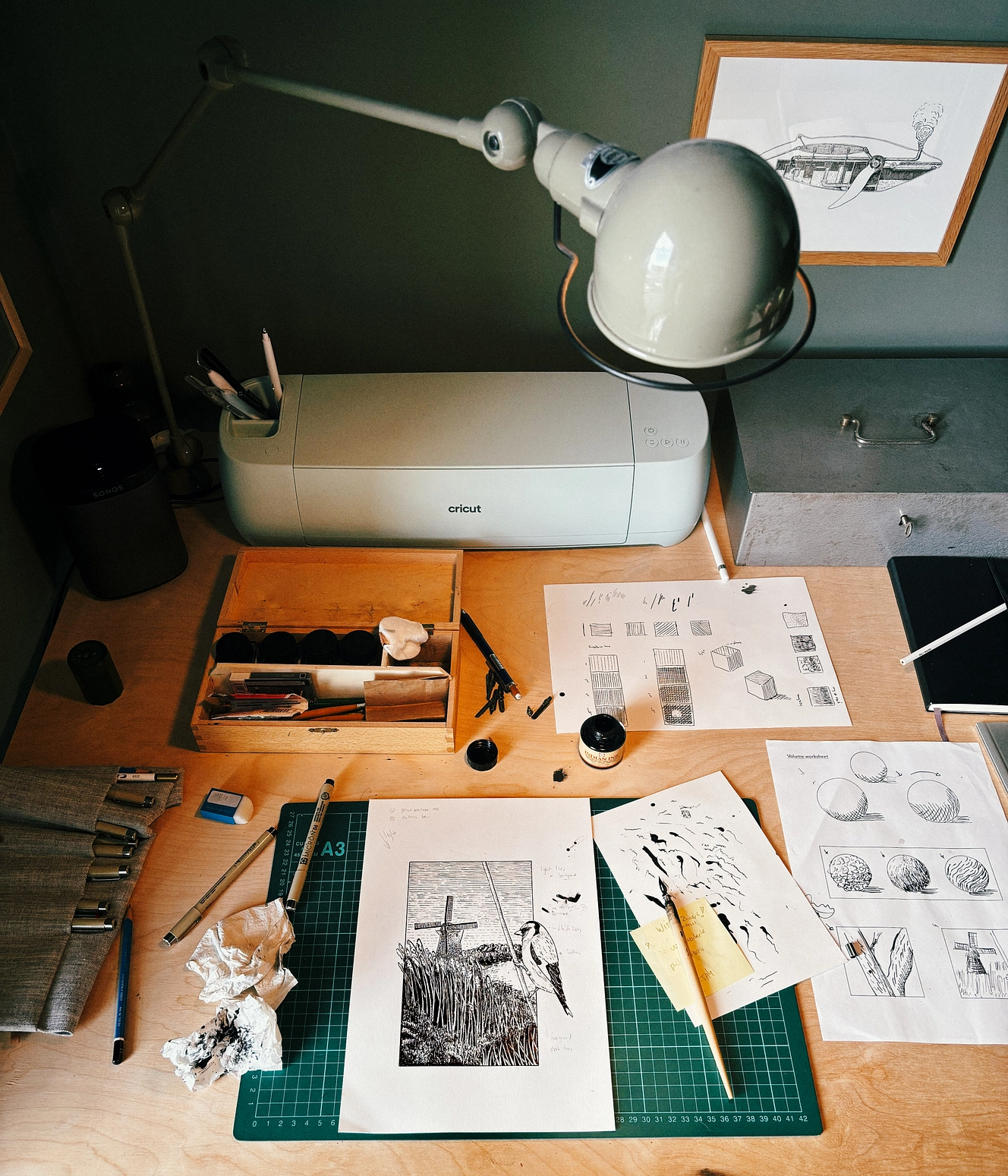
When I started drawing again over ten years ago, I mainly used Indian ink. I have a soft spot for it, but it never really became my own. Struggling with ink, finding the right nibs, and other hassles quickly led me to the wonderfully predictable Micron pens. To learn the technique better, I took an online course (Dip Pen and Ink Illustration: Capturing The Natural World). It was informative, but the final assignment remained half-finished. This week, I decided to finish it.
The first thing I did was spill big drops of black ink all over my work. Ouch.
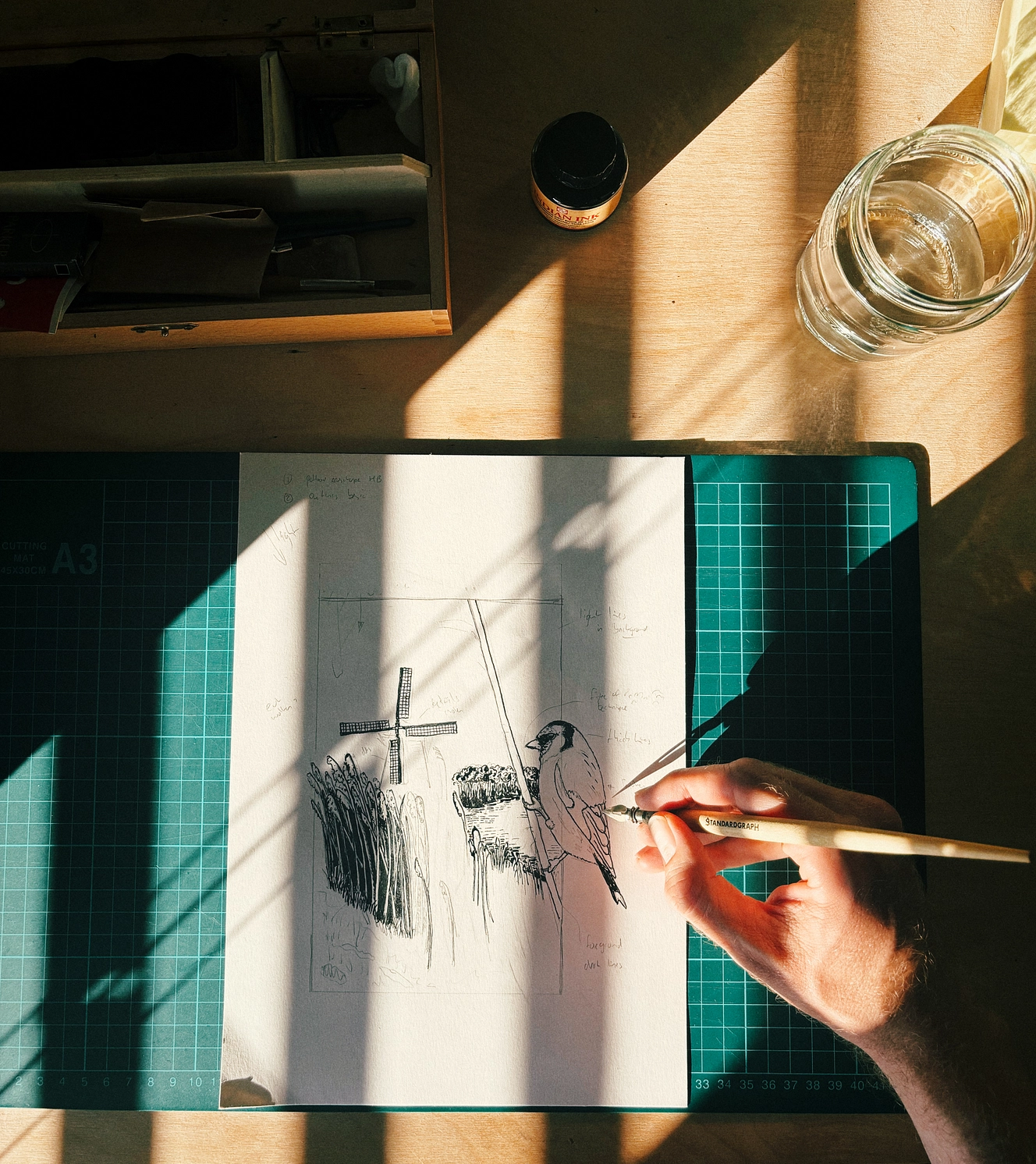
I pretended it hadn’t happened and finished it. The paper. My desk. My arms. Everything covered in ink. Luckily, this newsletter is my safe space where I can share my messes…
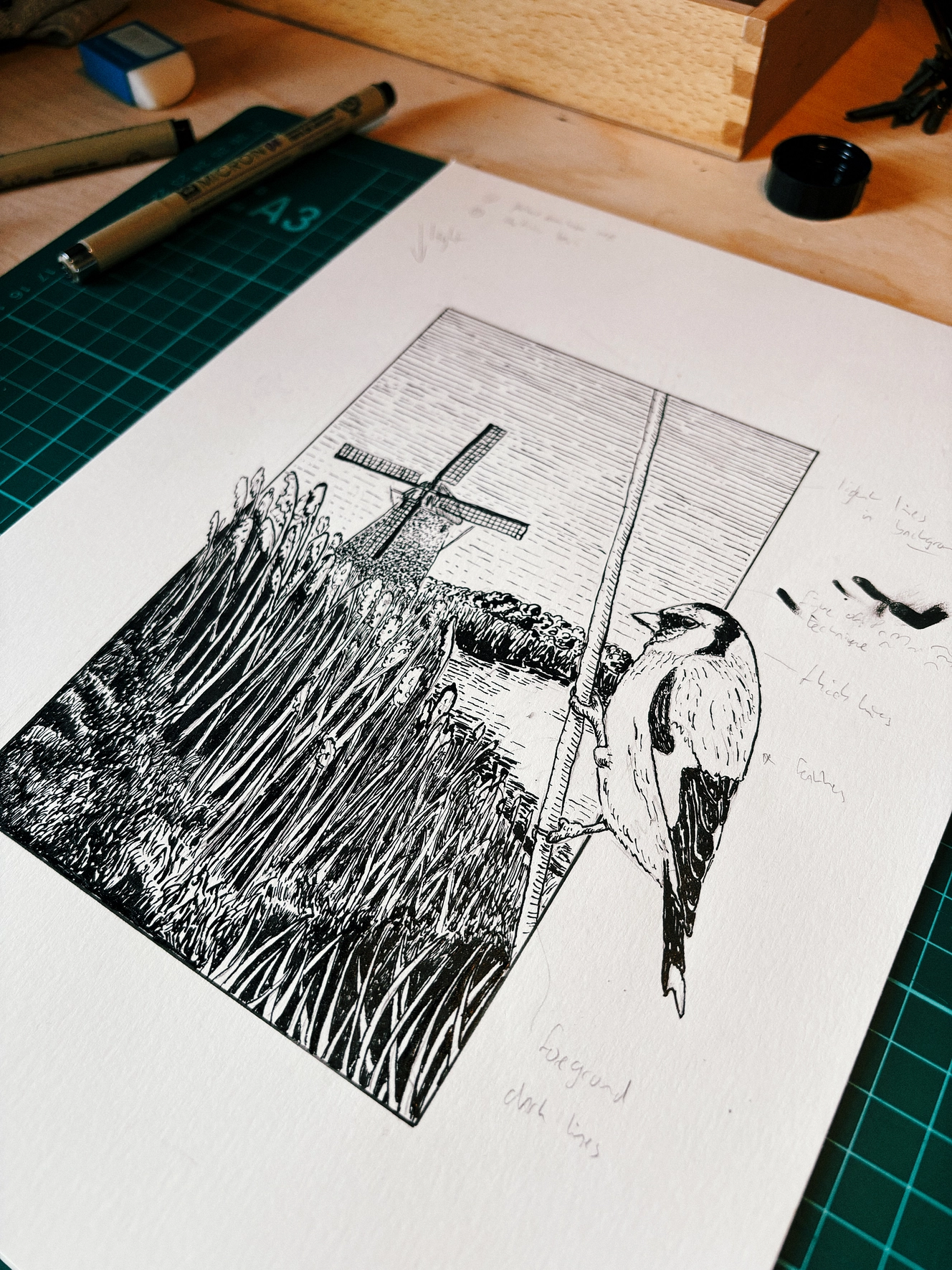
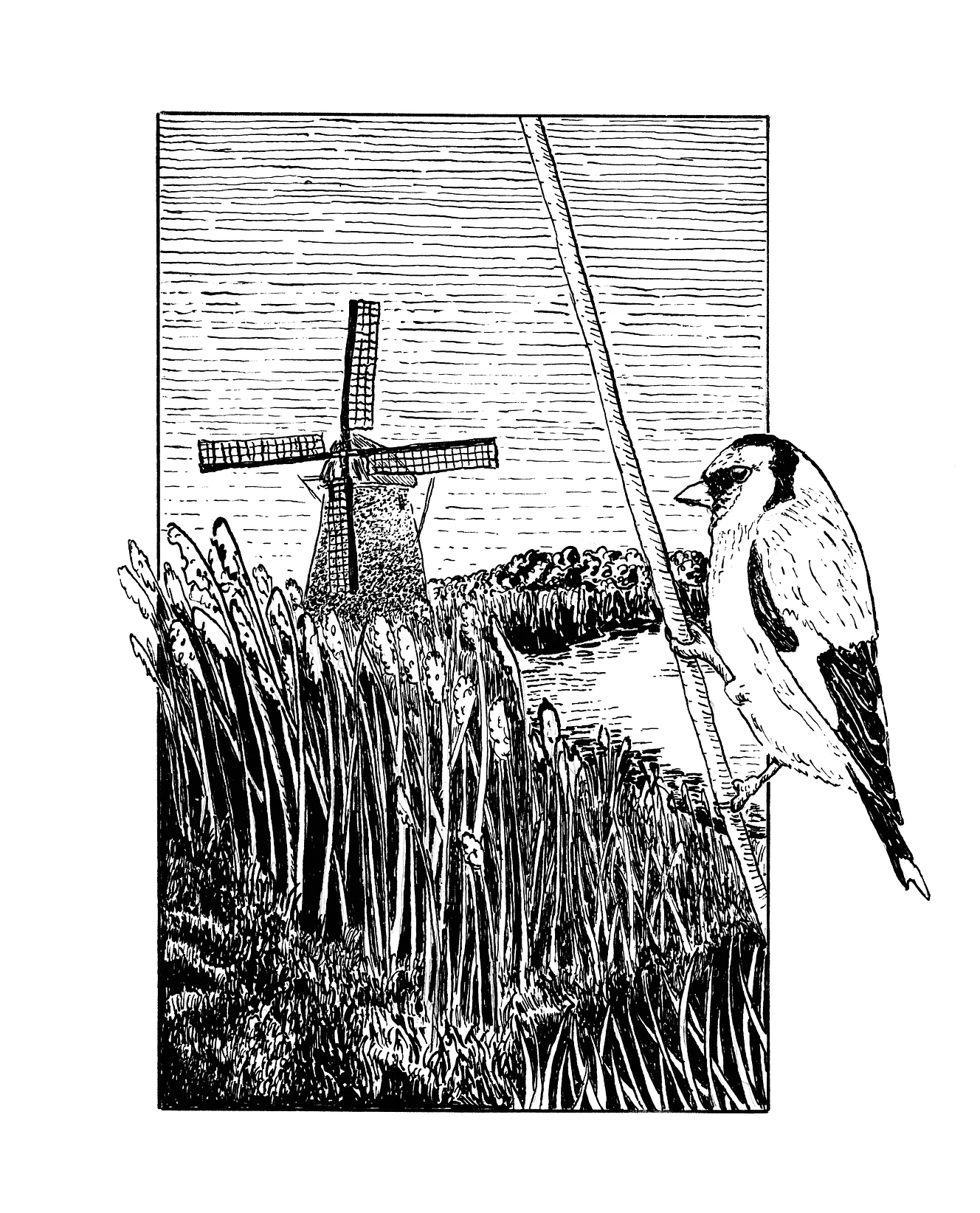
It’s a winter scene, based on my walks between the Bergse Plas and the Rotte in Rotterdam, where goldfinches are often spotted. The Prinsenmolen has stood there since 1648. What do you think of the result?
Reading
Over the past few years, I’ve been working my way through M., Antonio Scurati’s five-volume series on the rise and fall of Mussolini. I’ve now reached the fourth volume, but just like the previous ones, the intense prose and numerous characters require a great deal of concentration. So it’s not always the best book to pick up casually, but the effort is rewarded with every volume.
M. reads like a novel but is based on historical facts. The chapters end with actual newspaper clippings, police reports, letters, and diary excerpts from Mussolini and other key figures.
The facts and characters in this documentary novel are not products of the author’s imagination. Every individual event or character, every dialogue or speech in this book is historically documented and/or supported by more than one authoritative source. This does not, however, change the fact that history is a fiction for which reality provides the material. Just not a random fiction. — Colophon by M.
Part One spans from 1919 to 1925, covering the founding of his fascist movement, the March on Rome, and the assassination of opposition member Matteotti. The second part, covering 1925 to 1932, focuses on his time as Duce, during which democracy and a free press disappeared. Because the spirit of the times is also described, you learn a great deal.
If you find five volumes too ambitious, the books can also be read separately. In that case, I recommend the third volume, about the last days of Europe, in which Hitler drags Mussolini into World War II between 1938 and 1940. You follow a dictator who is slowly losing control. You won’t get any closer to that experience in book form.
Listen
“Van Vliet remains Van Vliet,” writes de Volkskrant in response to the debut album by his new band, The Hobknobs. I’ve known Arie for years, and it’s great to follow his musical adventures, such as the U.S. tour by his previous band, Lewsberg. Unfortunately, Lewsberg has disbanded, but together with Yaël Dekker, he’s already creating great songs as The Hobknobs, such as “My Conditions” and “The Tide.”
“I’m an island, you’re a sea. The waves keep rolling over me.”
In the summer, I’ll only send out Strook when it suits me. Until next time!
