Another Strook with something I drew, read, and listened to. Oh, and tinkered.
Drawing
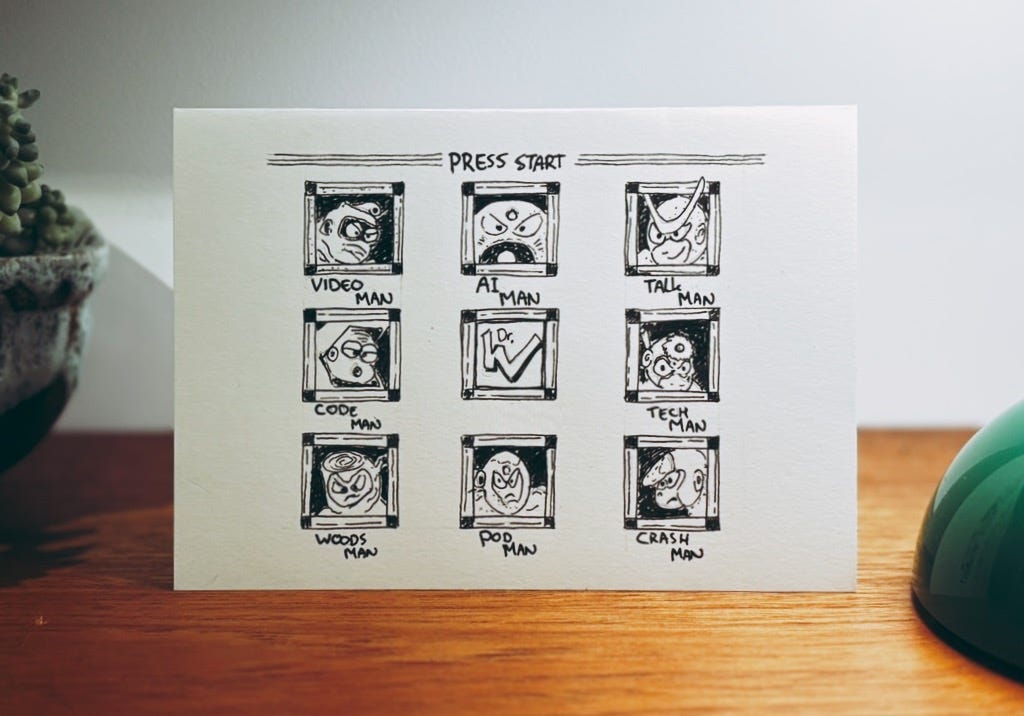
For a friend who is a Mega Man fan and is always busy with all kinds of things, I drew a card with the start screen of Mega Man II with all its characters.
Reading (& tinkering)

This week, I used Claude Code to quickly put together a personal blog1: strook.blog. When I send out a Substack newsletter, it also appears on my personal blog and an English translation is automatically generated, which I can then share. I didn't write a single line of code. It was addictively fun, though.
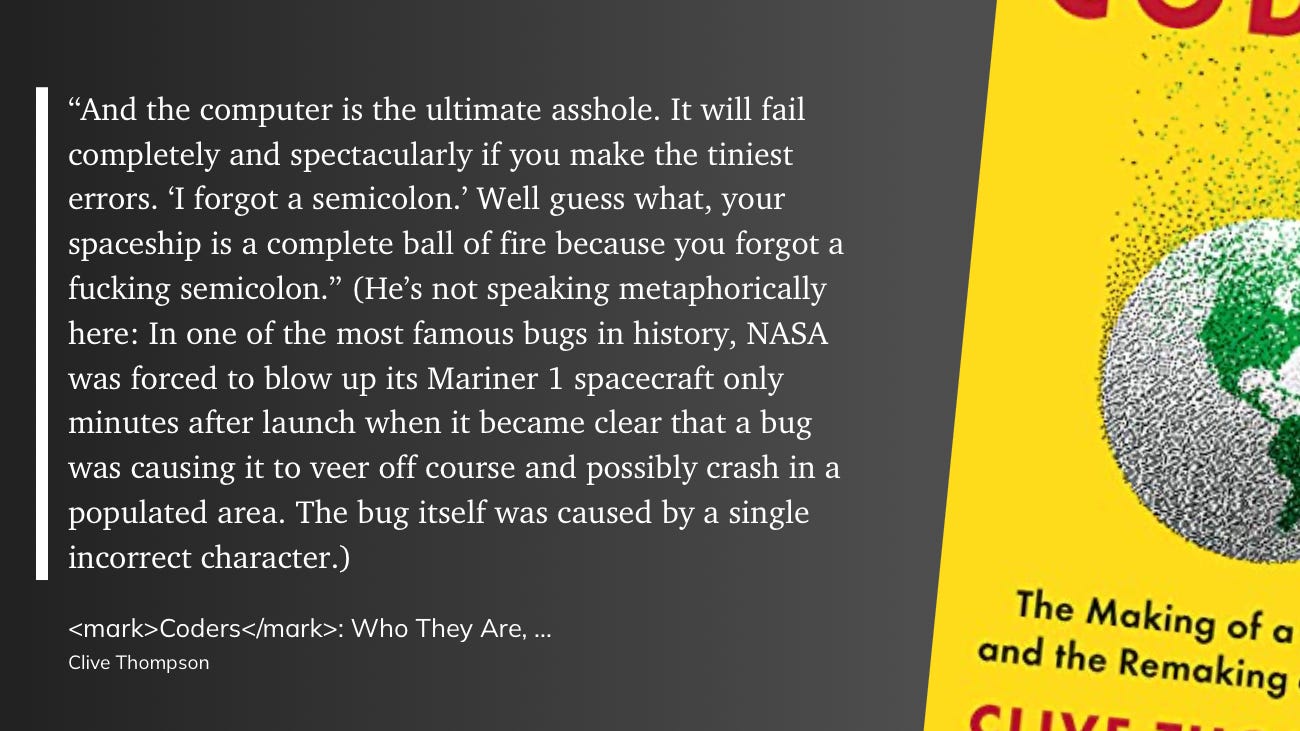
In his book Coders, Clive Thompson tells the story of the programmers who built our digital world and how their way of thinking determines how technology works and influences our lives. From rebellious, idealistic pioneers in the 1970s to the more cynical "move fast and break things" years. Programmers determined what was built and how.
In 2015, I wrote in the essay Code Machines that this role would change drastically. Services such as Squarespace and Webflow already promised that you could build complex digital products without writing code. This trend had already been set in motion by frameworks and libraries that speed up the work. Ideas were becoming easier and easier to realize without in-depth technical knowledge.
Well, they're here, those code machines. This year feels like a tipping point. The code machines are not only much faster (an understatement), but also increasingly capable of producing better and safer code than humans. I see no way back.
I am excited about the possibilities, but I also realize that something is being lost here. Nostalgia is a pointless emotion in technology, and I will spare you the story of how Mega Man and I, as 13-year-olds, HTML-ed our first .com website.
But still: coding is also a craft.
For several years, I presented CSS Day, where browser developers, book authors, and developers come together to discuss new standards, specifications, and code. It's a committed group with a focus on ethics, accessibility, and diversity. The internet is also teeming with labor of love projects for the web that, often open-source, can be used in exchange for a voluntary donation.
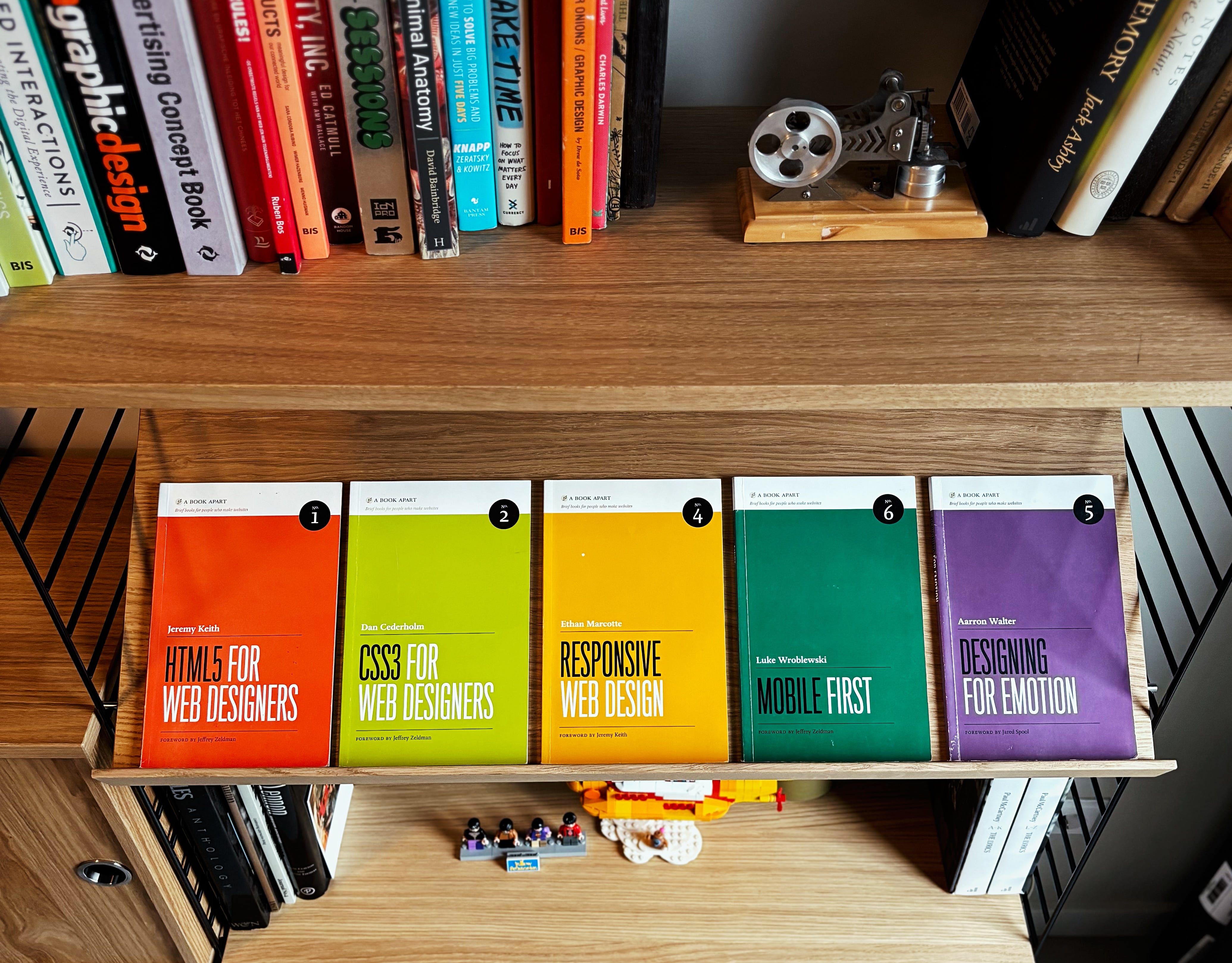
It is the result of this community that AI is now building on. The black box that builds apps while you get coffee has learned from countless blogs, presentations, and human-written code. In this wonderful tribute, Anil Dash describes how Markdown, a simple text format that was offered for free, now forms the basis for how we control ChatGPT.
The success of AI is fueled by the creativity and work of writers, artists, and performers who do not share in the success. Claude Code is no exception.
As is often the case with AI, the consequences are significant, but so are the possibilities. I find it telling that this same AI allows me to build an old-fashioned, personal blog to be less dependent on Substack. Today's internet is not what we hoped for2. In addition to the risk of more AI slop, there is also a unique opportunity to create valuable apps and websites of our own again.
Listening
After this brief return to web design, Claude Code (and my head) could use a break. I'll be drawing, working in nature, and working on the collection of the Natural History Museum. That less hurried life calls for music to match. Folk artist Truman Sinclair fits the bill perfectly.
See you next week!
Until now, I manually backed up my WordPress blog. I'm not the only one with some distrust of Substack; Rutger Otto did the same thing this week.
We didn't ask for this Internet. Ezra Klein of the NYT in conversation with Cory Doctorow.