Another Strook with something I drew, read, and listened to.
Drawing
In We, Bears (Strook #8), I described how, after years of working with pixels and code, I started drawing on paper again, inspired by 19th-century natural history illustrations. A few years ago, I wanted to develop this further and took an online course in Natural History Illustration, offered by a university in Australia, with wonderful teachers.1 Long live the internet.
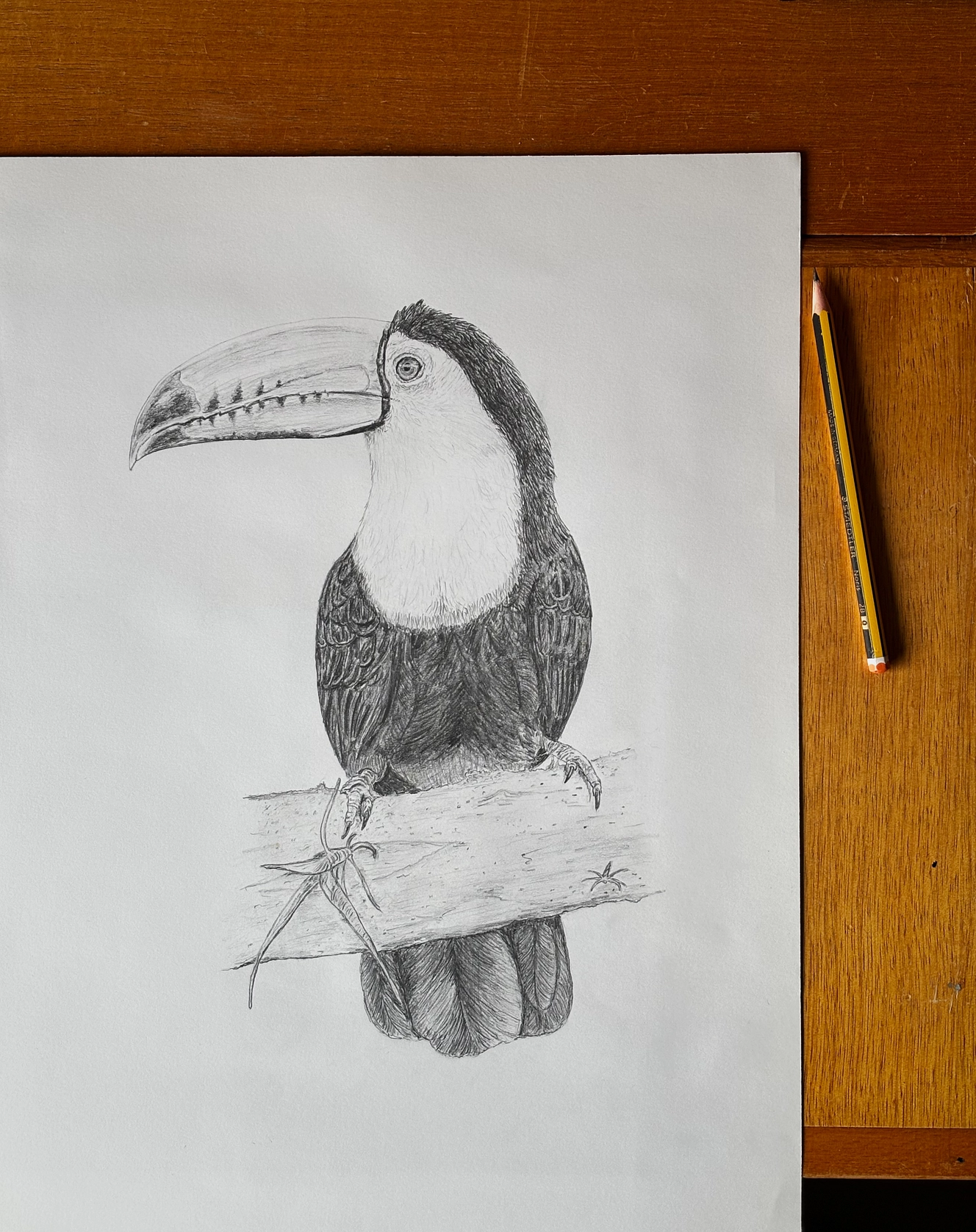
During the course, I learned that the basis is to know the anatomy and structure of the plant and animal kingdoms, from bones and muscles in mammals to the structure of flowers and the plumage of birds. To be able to draw well, nothing is more instructive than observing your subject on location, rather than from a photo.
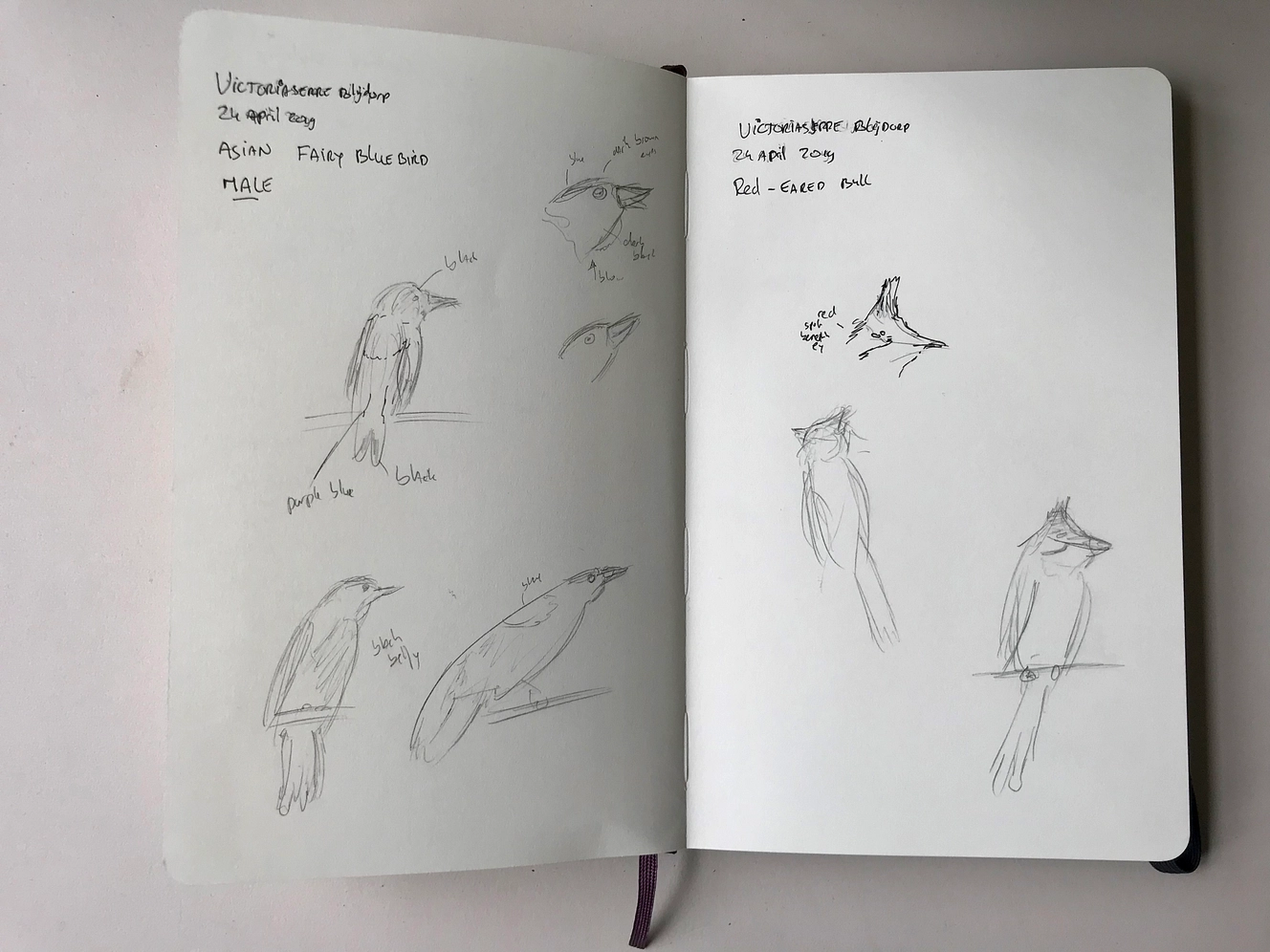
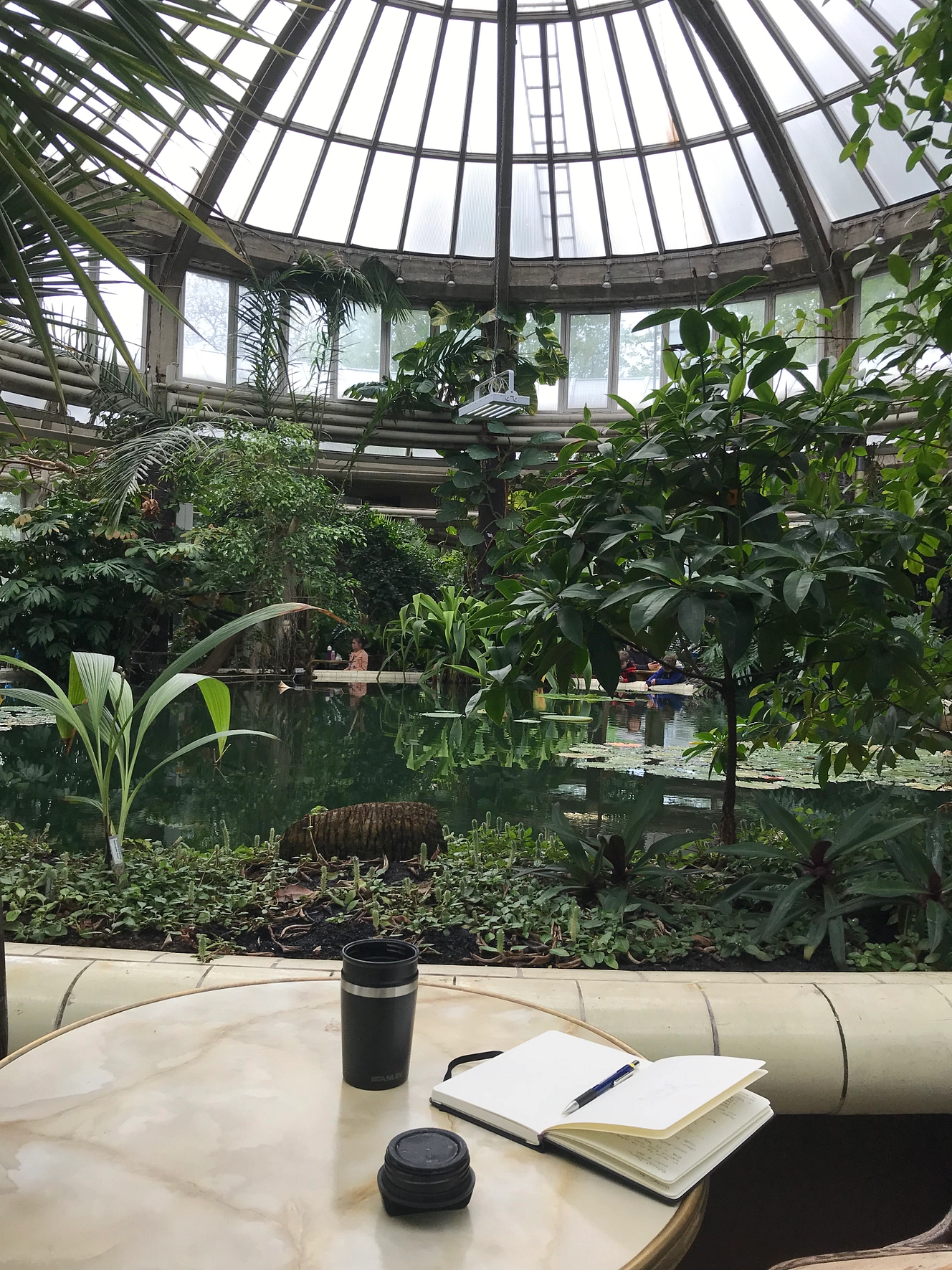
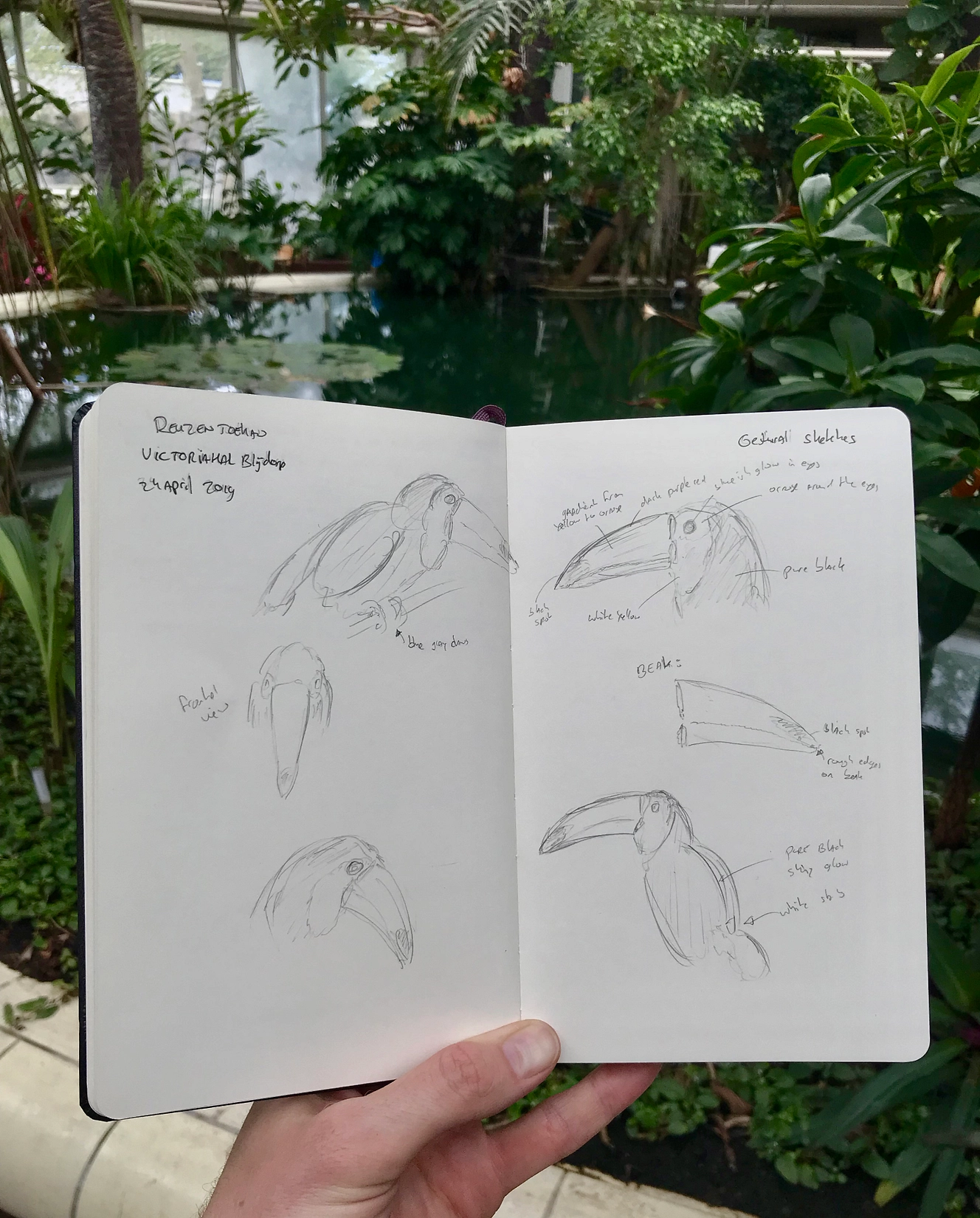
Drawing live animals is easier said than done. With gesture sketching, you try to capture the essence of your subject. Birds, in particular, do not sit still, which means you have to draw faster and more simply. You focus on the essence, movement, shape, and characteristics. Challenging for someone who normally draws tiny dots in slow motion!
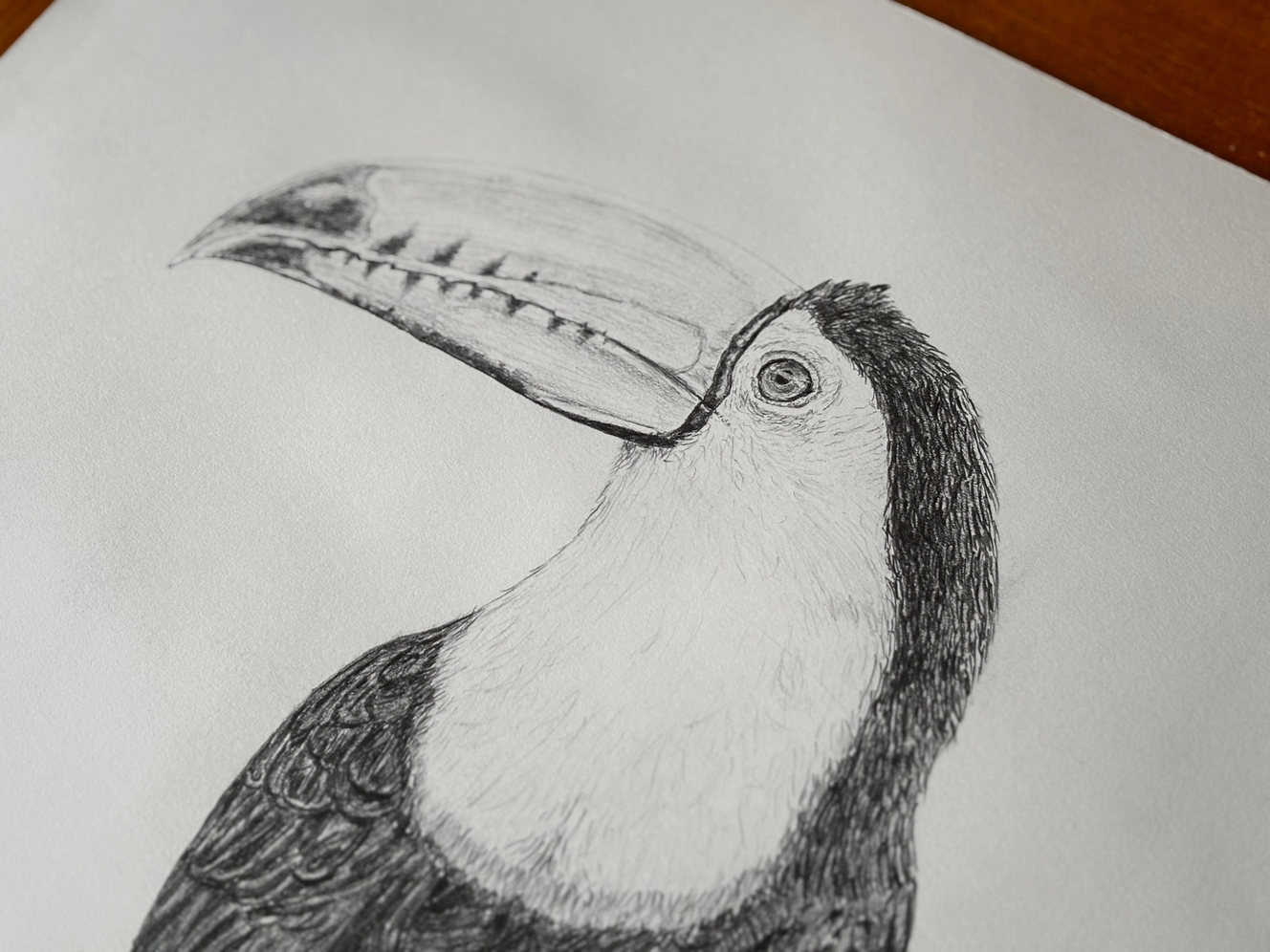
For my final assignment, I drew this toucan in pencil.
Reading
Readers of this newsletter will have noticed my great love for natural history and its leading figures. Buffon, Junghuhn, Beebe, Siebold, Linnaeus, and others have already been mentioned. In the Natural History Museum in Rotterdam, the names of the greatest natural scientists adorn the Salon.
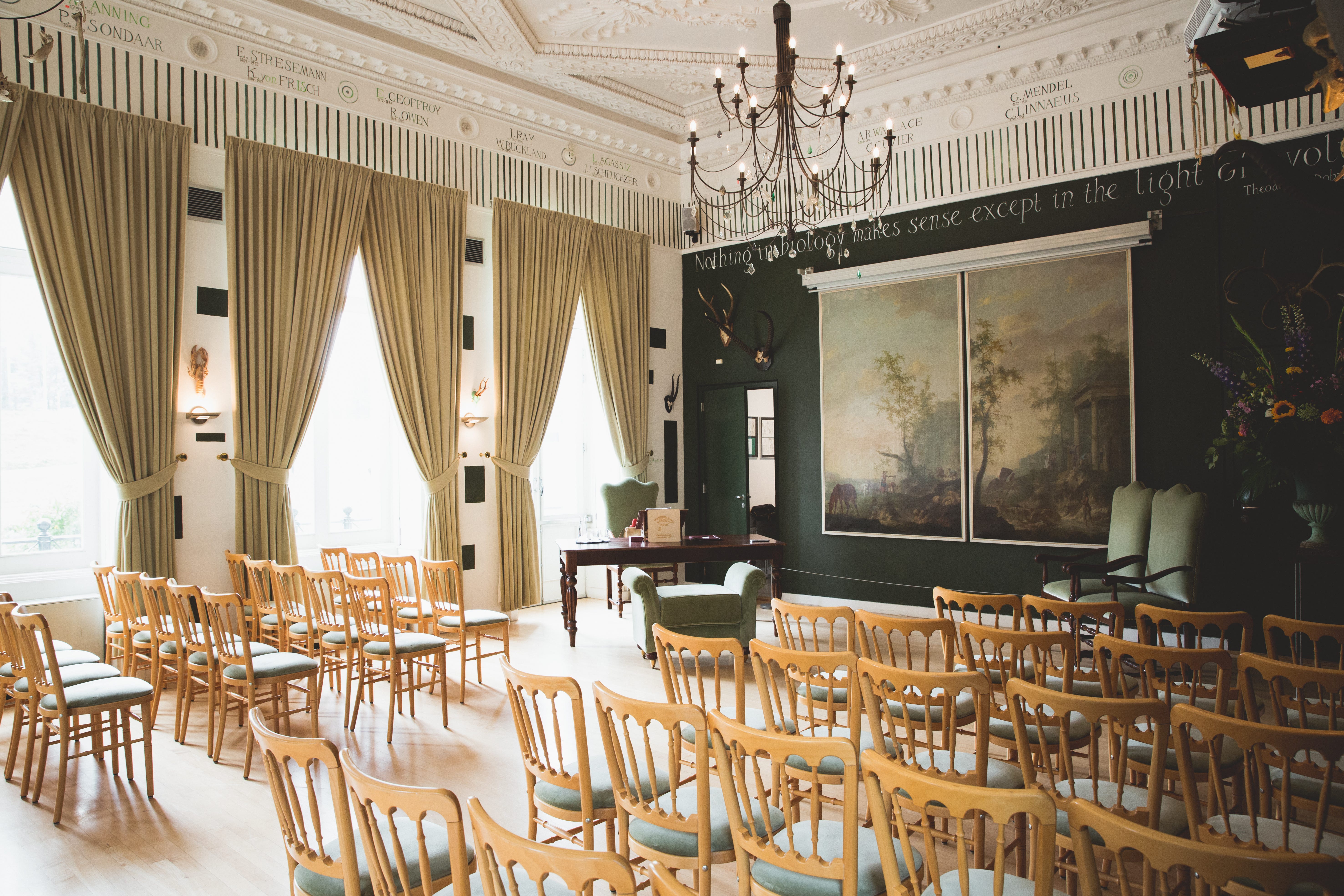
My wife and I got married there. It's a beautiful place, because we love natural history museums. I particularly enjoyed having my personal heroes Darwin, Wallace, and von Humboldt looking down on us. Well, in text form, that is.
But who are all those other natural scientists in the hall of fame? They are the subject of the book Great Scientists, which was presented in the Salon this weekend. Written by Jelle Reumer and beautifully illustrated by Yara Ruby. Names such as Lyell, Haeckel, van Leeuwenhoek, but also scientists I don't know yet. I can continue with my biography reading list for a while.
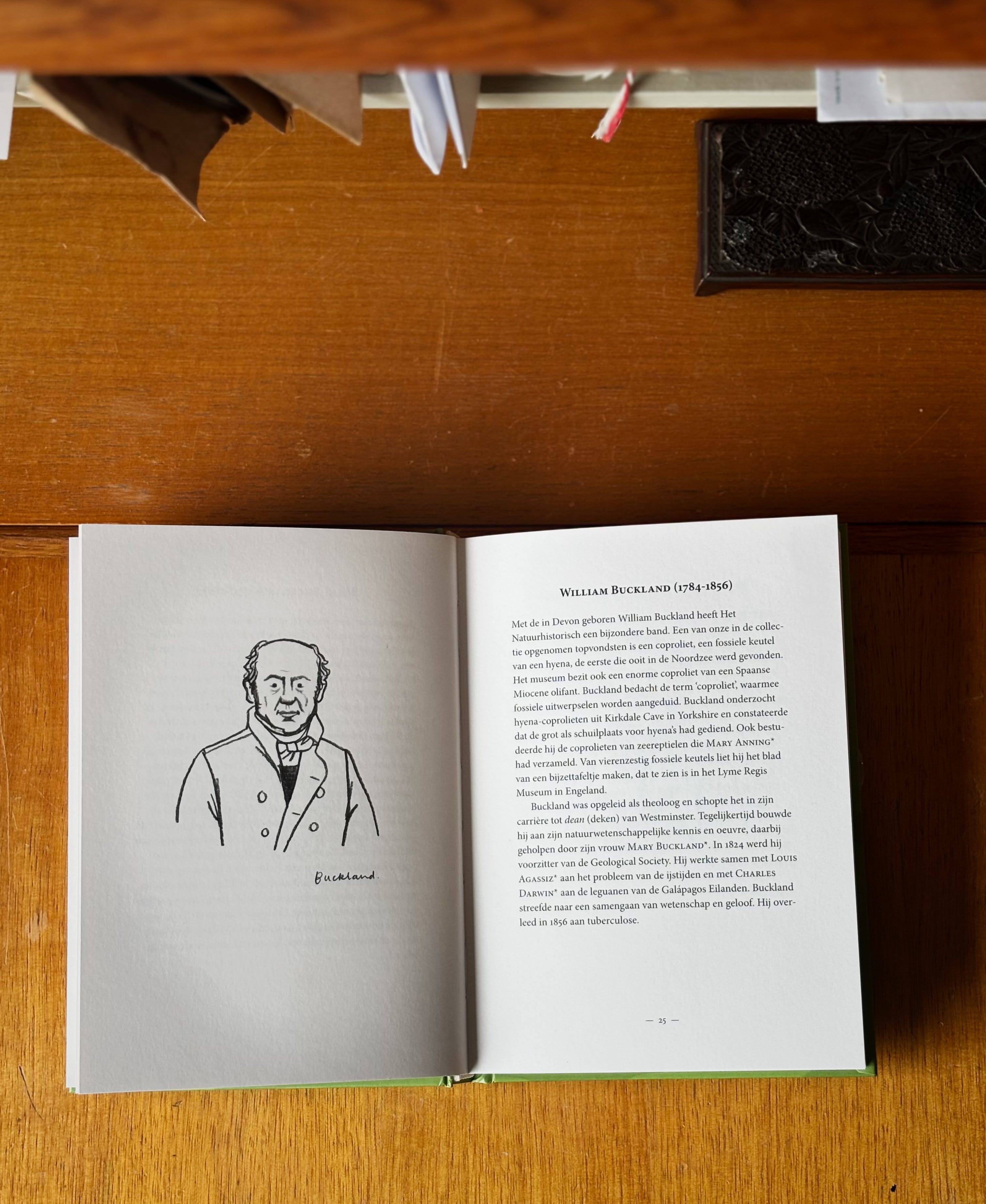
During the book presentation, special attention was paid to female natural scientists, who often missed out on the recognition they deserved during their lifetime. Such as Mary Anning, who discovered the first Ichthyosaurus at the age of 11(!). During her lifetime, she discovered plesiosaurs, pterosaurs, and other remarkable finds on the Jurassic Coast. Despite this, as a woman, she was not allowed to become a member of the Geological Society, and many of her discoveries were attributed to the men who bought her fossils.
Fortunately, she now has a place in the hall of fame. An animated film has even been made about her.
Listen
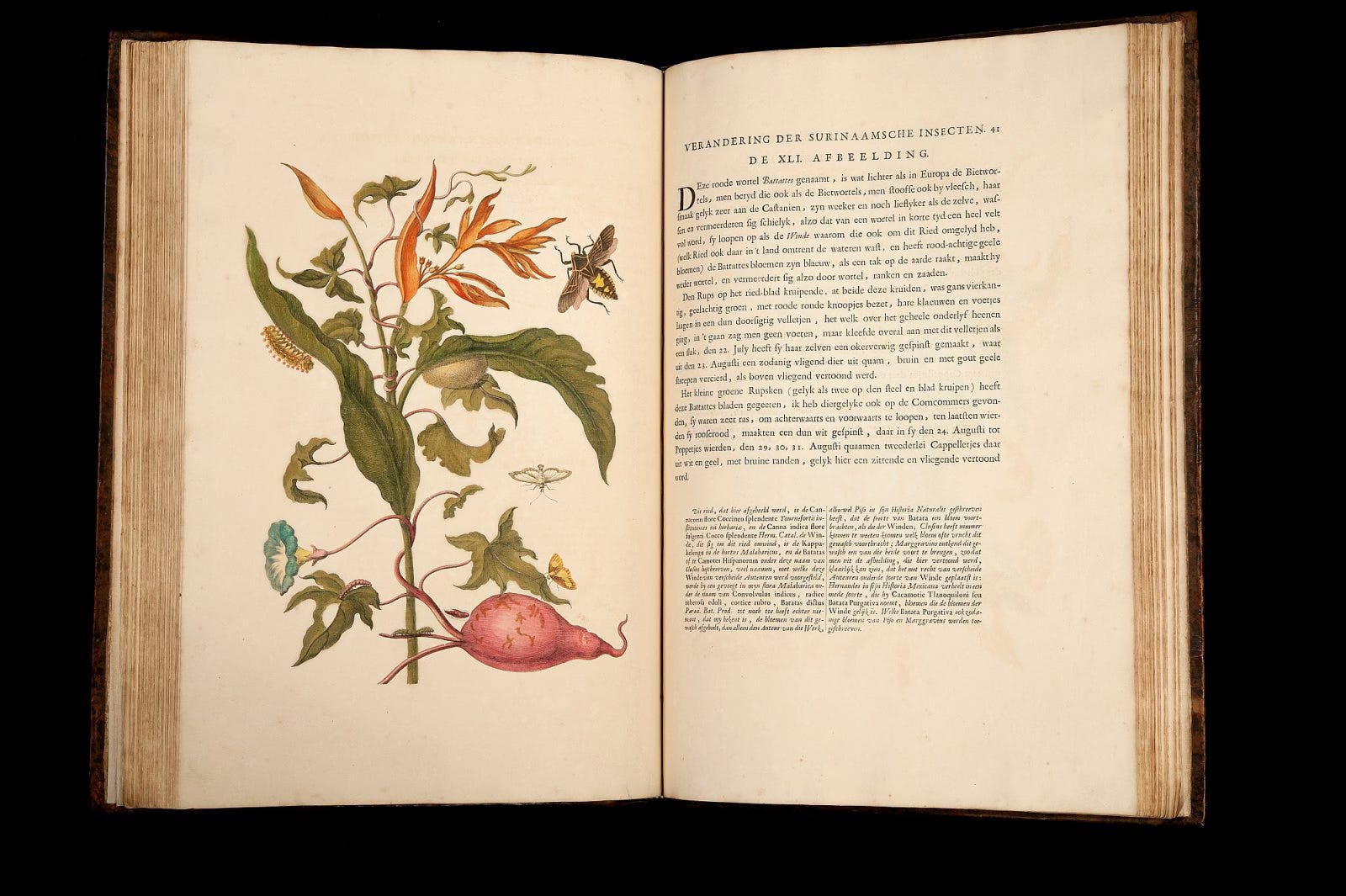
The NRC podcast Onbehaarde apen (Hairless Monkeys) regularly features fascinating episodes about natural scientists. These include biologist E.O. Wilson, primatologist Frans de Waal, and, to stay with women and drawing, illustrator Maria Sibylla Merian. In the 17th century, she traveled to Suriname, where she drew not only insects, but also their habitat and metamorphoses. She is considered one of the founders of ecology. What an extraordinary life.
This section is actually for music. This week, Rebuilding, an instrumental album that folk guitarist Jake Xerxes Fussell made for a film, was also my soundtrack.
See you next week.
One of the few places where you can study a bachelor's degree focused entirely on Natural History Illustration is The University of Newcastle in Australia.